

Singapore company Hydrantula develops a modular way to build coastal protection faster and at a lower cost, solution to be launched during SIWW 2026.
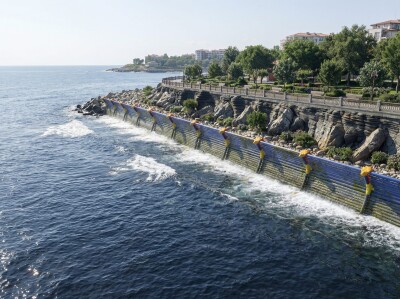
Singapore company Hydrantula develops a modular way to build coastal protection faster and at a lower cost.
The method assembles most of a structure on land before it is filled with concrete at sea and is designed to double as a habitat for marine life.
SINGAPORE - Media OutReach Newswire - 11 June 2026 - Singapore-based Hydrantula, will unveil the solution over Singapore International Water Week 2026.
Singapore company Hydrantula develops a modular way to build coastal protection faster and at a lower cost.
As Singapore and its neighbours plan decades of investment to defend low-lying coasts against rising seas, a local company is proposing a different way to build the structures that do the work ? assembling most of the structures on land and finishing the final works in the water.
A coastline problem with no single answer
Singapore has more than 300km of coastline, and no single solution fits all of it. About 70 to 80 per cent is currently protected by seawalls and stone embankments, and the national water agency PUB has said the country needs solutions that are both cost-effective and multifunctional, given its limited land. Sea levels around Singapore could rise by up to about 1m by 2100, and higher still when combined with high tides and storm surges.
Conventional marine construction is slow and expensive, largely because much of the work is done in the water, using heavy equipment, divers and processes such as pile driving that disturb the seabed. Hydrantula, a Singapore-based company, has been developing a method intended to move most of that work back onto land
Building on land, finishing at sea
The system uses a lightweight, permanent formwork built from standard HDPE pipes joined by moulded plastic nodes. The frame is assembled onshore ? the company estimates around 90 per cent of the work is done on land ? then lowered into position and filled with reinforced concrete pumped from the bottom up, displacing the water inside. Once the concrete hardens, the result is a monolithic reinforced-concrete structure within a plastic shell.
Because the geometry is set by the pipework rather than by custom moulds, the company says the same family of parts can form a range of structures, from floating breakwaters and seawalls to jetty foundations, mooring ramps and terraced, beach-retaining shoreline structures.
Hydrantula says the approach can cut construction time by roughly two to three times, and cost to around a third of conventional methods, for equivalent reinforced-concrete structures. It also estimates the life-cycle carbon of its structures at about 5 tonnes of CO2 per metre over 60 years, against roughly 25 tonnes for conventional reinforced concrete, based on the company's own assessment to ISO 14040/14044. These are design targets and company estimates rather than independently certified figures.
Designed to host marine life
The open frame is intended to let wave energy pass through rather than reflect it and does not seal the seabed beneath a solid foundation. Over time, the submerged plastic surfaces are colonised by marine organisms, so the structure can also function as an artificial reef ? an approach in line with the "hybrid" coastal solutions, combining hard structures with nature, that researchers in Singapore are actively studying. The company targets a service life of more than 60 years.
"Most of the cost, the risk and the environmental disturbance in marine construction comes from working in the water. If you can do the bulk of the work on land and keep the disturbance at sea short, the economics and the footprint both change. We are not trying to out-build nature ? we are trying to build with it."
? Nikita Shcherbina, Co-Founder of Hydrantula PTE Ltd
Still to be proven at scale
The technology is at an early commercial stage. Hydrantula has proposals and pilot discussions under way in Singapore, elsewhere in Southeast Asia and in California, and is pursuing research collaboration with Singapore academic partners to test its structural performance and ecological behaviour under local conditions. Its performance and durability claims have yet to be verified in long-term field use.
The company will present the system at Singapore International Water Week 2026 (SIWW2026 booth number: L1-A23), which runs from 15 to 18 June at the Sands Expo & Convention Centre, Marina Bay Sands.
Hashtag: #Hydrantula #CoastalProtection #Marineconstruction #SIWW2026
The issuer is solely responsible for the content of this announcement.
About Hydrantula
Hydrantula PTE LTD (Singapore, UEN 202600937R) is a coastal-resilience technology company developing a modular marine construction platform based on permanent HDPE formwork filled with reinforced concrete and GFRP reinforcement. The technology is designed for the marine environment and spans applications from breakwaters and seawalls to foundations, terraced shoreline structures and artificial reefs.
For more information, please visit:
 www.hydrantula.com
 LAINNYA
- Vietnam Airlines Partners with Visa and AWS to Advance Digital Transformation and AI
- AIGP Health expands Southeast Asian footprint with Thailand launch through Borderless Healthcare Group partnership
- A Vote for the Future: Vinhomes Green Paradise Heads to the Global Vote in the '7 Wonders of Future Cities' Campaign
- GE Aerospace Menandatangani Perjanjian Dukungan Layanan Sistem Avionik dengan FL Technics Indonesia
- GE Aerospace Signs Avionics Systems Service Support Agreement with FL Technics Indonesia
- SIAM PARAGON BANGKOK WATCH WEEK 2026: OPENING CEREMONY A Night Celebrating Watch Culture

.jpg)
Untuk Berbagi Berita / Informasi / Peristiwa
Silahkan SMS ke nomor HP : 0853-6543-3434/0812-6686-981
atau email ke alamat : redaksimonitorriau@gmail.com
Harap camtumkan detail data diri Anda
Pengutipan Berita dan Foto, Cantumkan Monitorriau.com Sebagai Sumber Tanpa Penyingkatan